Parallel Worlds, Parallel Lives
Favorite
trailer
https://videos.trom.tf/videos/embed/xzF1a9GLWpukUpBgxyzJm8?autoplay=0&title=0&warningTitle=0&peertubeLink=0
magnet
YEAR: 2008 | LENGTH: 1 part (52 minutes) | SOURCE: PBS
description:
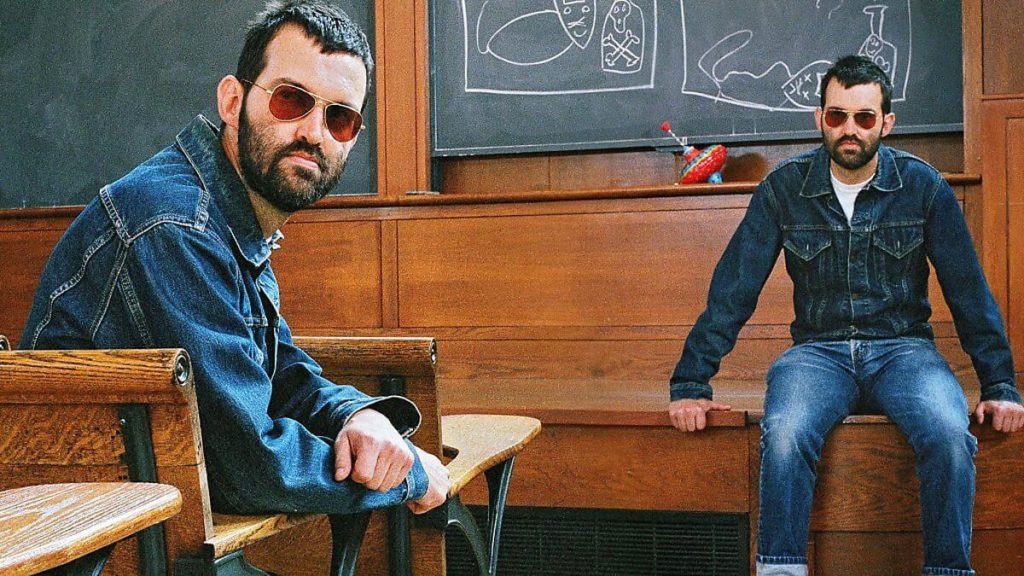
For most of Mark Oliver Everett’s life, things didn’t add up. “Parallel Worlds, Parallel Lives” follows Mark, better known as E, the lead singer of the rock band EELS, across the country as he attempts to understand the fantastic possibility of parallel universes and unravel the story of his troubled family and the father he never really knew—iconoclastic quantum physicist Hugh Everett III.
Scientific American described Hugh Everett as “one of the most important scientists of the 20th century.” In 1957, he proposed the controversial Many Worlds Theory, a startling interpretation of quantum mechanics. The theory makes the astounding prediction that parallel universes are constantly splitting off from our everyday reality. For many years, Hugh Everett’s mind-boggling theory was overlooked. Today, the concept of parallel universes is not only explored by many top physicists, but it also inspired many films, television series, and books, including The Golden Compass, Star Trek, andThe Subtle Knife. (See Science Fiction and Fact for more on this parallel evolution of ideas.)
In this intelligent and imaginative film, the wry and charismatic Mark takes an emotional journey into his father’s life, meeting Hugh’s old college friends, colleagues, and admirers, including MIT physicist Max Tegmark, a vocal proponent of Hugh’s ideas. It is only by entering the esoteric world of quantum physics that Mark can hope to gain an understanding of, and more importantly, a connection to the father who was a stranger to him.
Hugh Everett published his theory of parallel universes over 50 years ago as a Ph.D. student at Princeton University. (See an expanded version of Hugh’sdissertation as well as two related original documents he wrote.) But it remained largely ignored by the scientific community for 20 years. Hugh’s hypothesis countered the Copenhagen Interpretation, the most widely accepted view of the many puzzles of quantum physics, developed by Nobel laureate Niels Bohr. At that time, many considered the ambitious 24-year-old extremely naive and arrogant to challenge Bohr, who rivaled Albert Einstein as one of the giants of the physics world. (Learn more about the theory in aninterview with Hugh’s biographer, Peter Byrne.)
Through interviews and archival materials, the film conveys how Bohr’s disregard of Everett’s work devastated the young scientist. Dejected and depressed, he left quantum physics behind and became a defense analyst, conducting classified research for the Pentagon. Later he joined the corporate world, applying mathematical modelling in industry. The chain-smoking, hard-drinking Hugh Everett died of a heart attack in his Virginia home, long before Mark could appreciate his father’s professional triumphs and frustrations.
“My father never, ever said anything to me about his theories,” Mark says. “I was in the same house with him for at least 18 years, but he was a total stranger to me. He was in his own parallel universe. He was a physical presence, like the furniture, sitting there jotting down crazy notations at the dining room table night after night. I think he was deeply disappointed that he knew he was a genius but the rest of the world didn’t know it.”
Mark Everett jokingly admits that he can barely tabulate a restaurant tip, let alone understand his father’s complex ideas. While Hugh focused on science, Mark focused on music. He mastered the piano, drums, and guitar, and became an accomplished songwriter. In addition to writing material for their award-winning albums, EELS contributed songs to movie soundtracks, including How the Grinch Stole Christmas and the three animated Shrek films.
Now in his forties, Mark is the sole surviving member of his family, which he has described as strange and lonely. With an intimate, often quirky style, “Parallel Worlds, Parallel Lives” delves deep into the Everett’s family history, including the bouts of mental illness. Mark’s father and paternal grandmother both suffered from severe depression, as did his deeply troubled sister. The making of this documentary reintroduced Mark Everett to his father and helped him understand his dreams and disappointments. (Read Finding My Father, an excerpt from Mark’s newly published autobiography.)
“I feel like I know my father a lot better,” Mark says. “I feel I understand more of the whole time line of events. Just talking to all these people who knew him, it feels like he’s around now more than ever before.”
SIMILAR TITLES:
 The Secrets of Quantum Physics
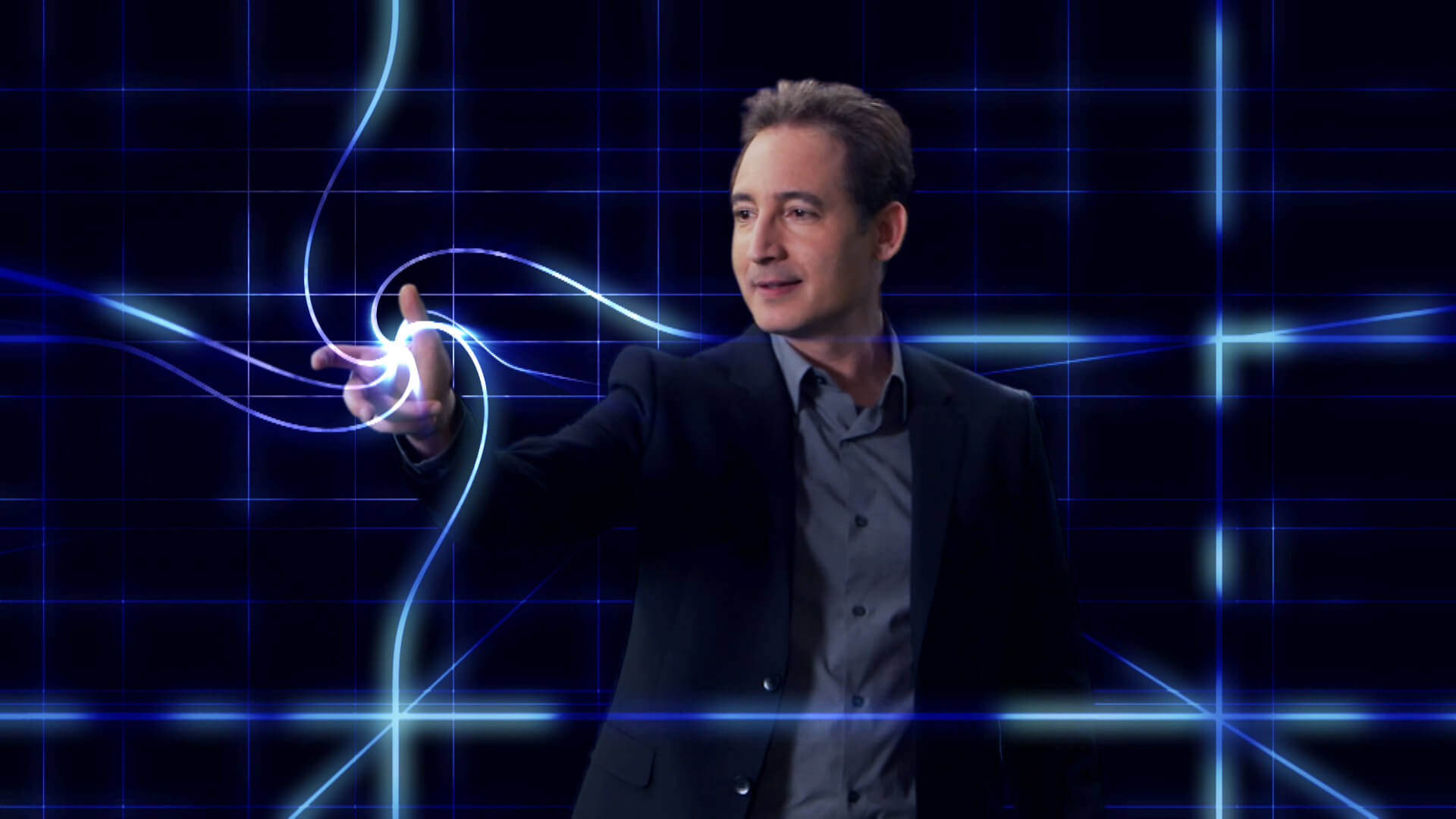 The Fabric of the Cosmos
 Gravity and Me: The Force That Shapes Our Lives
 James May’s Things You Need to Know
 Infinite Secrets of Archimedes
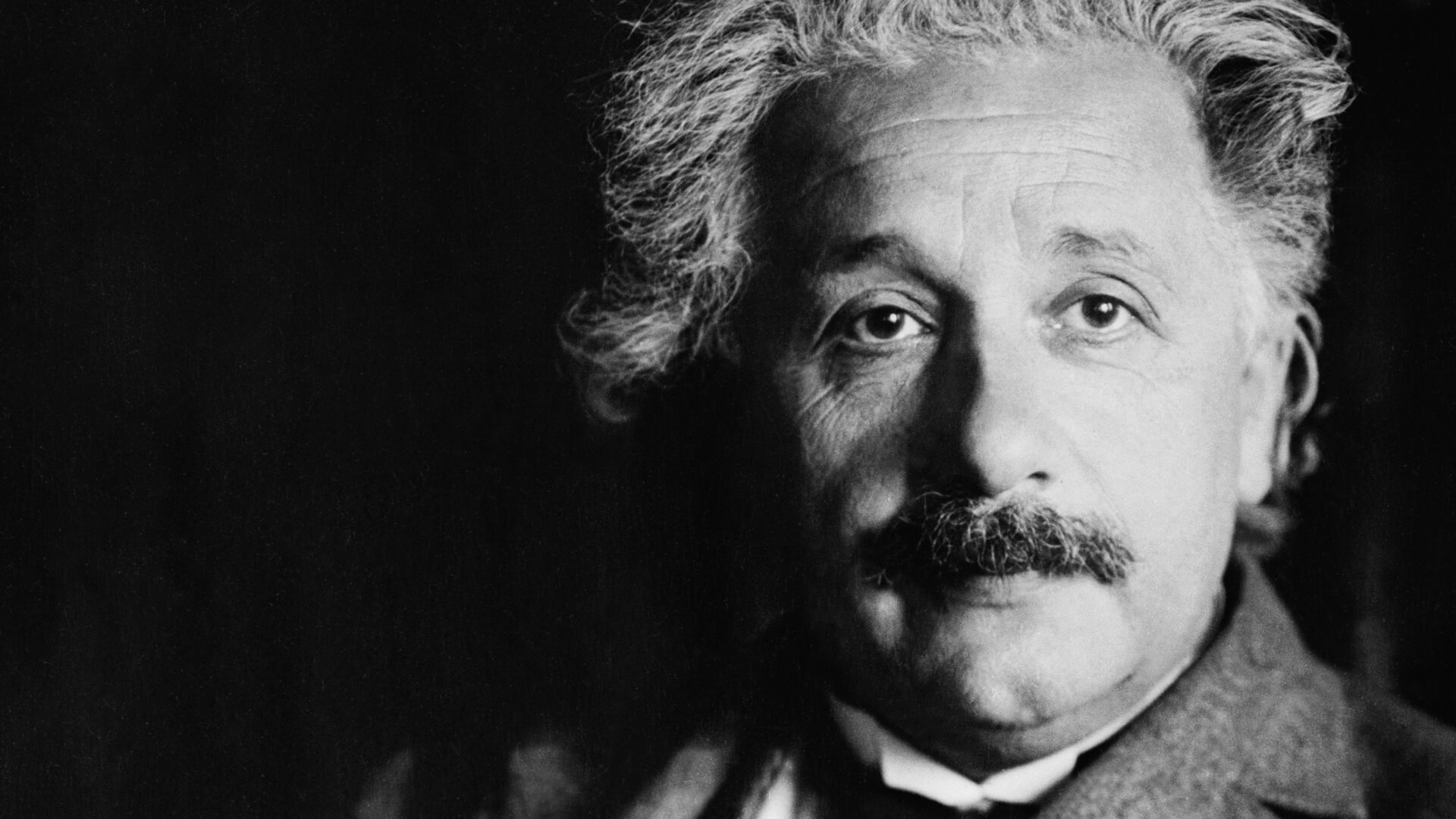 Einstein’s Big Idea
The Fabric of the Cosmos
Favorite
trailer
https://videos.trom.tf/videos/embed/e79UkcvKrYX24Ky2Rj5ZBK?autoplay=0&title=0&warningTitle=0&peertubeLink=0
magnet
YEAR: 2012 | LENGTH: 4 parts (56 minutes each) | SOURCE: PBSdescription:
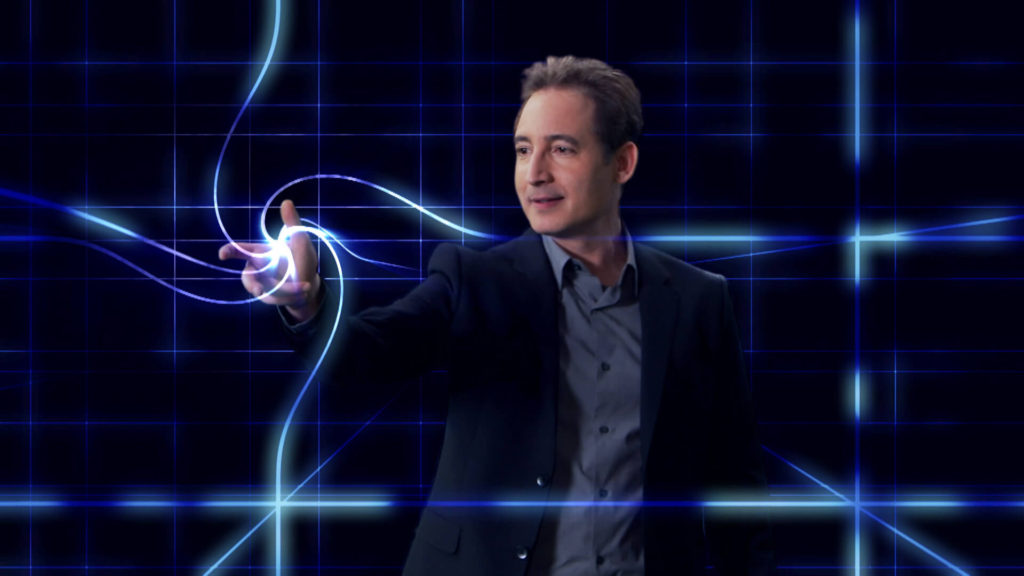
“The Fabric of the Cosmos,” a four-hour series based on the book by renowned physicist and author Brian Greene, takes us to the frontiers of physics to see how scientists are piecing together the most complete picture yet of space, time, and the universe. With each step, audiences will discover that just beneath the surface of our everyday experience lies a world we’d hardly recognize—a startling world far stranger and more wondrous than anyone expected.
Brian Greene is going to let you in on a secret: We’ve all been deceived. Our perceptions of time and space have led us astray. Much of what we thought we knew about our universe—that the past has already happened and the future is yet to be, that space is just an empty void, that our universe is the only universe that exists—just might be wrong.
Interweaving provocative theories, experiments, and stories with crystal-clear explanations and imaginative metaphors like those that defined the groundbreaking and highly acclaimed series “The Elegant Universe,” “The Fabric of the Cosmos” aims to be the most compelling, visual, and comprehensive picture of modern physics ever seen on television.episodes:
01. What Is Space?
Space. It separates you from me, one galaxy from the next, and atoms from one another. It is everywhere in the universe. But to most of us, space is nothing, an empty void. Well, it turns out space is not what it seems. From the passenger seat of a New York cab driving near the speed of light, to a pool hall where billiard tables do fantastical things, Brian Greene reveals space as a dynamic fabric that can stretch, twist, warp, and ripple under the influence of gravity. Stranger still is a newly discovered ingredient of space that actually makes up 70 percent of the universe. Physicists call it dark energy, because while they know it’s out there, driving space to expand ever more quickly, they have no idea what it is.
Probing space on the smallest scales only makes the mysteries multiply. Down there, things are going on that physicists today can barely fathom—forces powerful enough to generate whole universes. To top it off, some of the strangest places in space, black holes, have led scientists to propose that like the hologram on your credit card, space may just be a projection of a deeper two-dimensional reality taking place on a distant surface that surrounds us. Space, far from being empty, is filled with some of the deepest mysteries of our time.
02. The Illusion of Time
Time. We waste it, save it, kill it, make it. The world runs on it. Yet ask physicists what time actually is, and the answer might shock you: They have no idea. Even more surprising, the deep sense we have of time passing from present to past may be nothing more than an illusion. How can our understanding of something so familiar be so wrong? In search of answers, Brian Greene takes us on the ultimate time-traveling adventure, hurtling 50 years into the future before stepping into a wormhole to travel back to the past. Along the way, he will reveal a new way of thinking about time in which moments past, present, and future—from the reign of T. rex to the birth of your great-great-grandchildren—exist all at once. This journey will bring us all the way back to the Big Bang, where physicists think the ultimate secrets of time may be hidden. You’ll never look at your wristwatch the same way again.
03. Quantum Leap
Join Brian Greene on a wild ride into the weird realm of quantum physics, which governs the universe on the tiniest of scales. Greene brings quantum mechanics to life in a nightclub like no other, where objects pop in and out of existence, and things over here can affect others over there, instantaneously and without anything crossing the space between them. A century ago, during the initial shots in the quantum revolution, the best minds of a generation—including Albert Einstein and Niels Bohr—squared off in a battle for the soul of physics. How could the rules of the quantum world, which work so well to describe the behavior of individual atoms and their components, conflict so dramatically with the everyday rules that govern people, planets, and galaxies?
Quantum mechanics may be counterintuitive, but it’s one of the most successful theories in the history of science, making predictions that have been confirmed to better than one part in a billion, while also launching the technological advances at the heart of modern life, like computers and cell phones. But even today, even with such profound successes, the debate still rages over what quantum mechanics implies for the true nature of reality.
Notes on the DVD: The DVD version of the program stated that one entangled photon is sent from the island of La Palma to the island of Tenerife by laser. The photon is sent via laser-guided telescope. In the DVD version of the program, it appears that the research team led by Anton Zeilinger has successfully teleported photons from La Palma to Tenerife. Although the Zeilinger team has used the method described to teleport photons shorter distances in other locations, as of November 2011, photons have not yet been teleported between La Palma andTenerife. The team plans to continue experiments in the Canary Islands, which attempt to complete the teleportation process there.
04. Universe or Multiverse?
Hard as it is to swallow, cutting-edge theories are suggesting that our universe may not be the only universe. Instead, it may be just one of an infinite number of universes that make up the “multiverse.” In this show, Brian Greene takes us on a tour of this brave new theory at the frontier of physics, showing what some of these alternate realities might be like. Some universes may be almost indistinguishable from our own; others may contain variations of all of us, where we exist but with different families, careers, and life stories. In still others, reality may be so radically different from ours as to be unrecognizable. Brian Greene reveals why this radical new picture of the cosmos is getting serious attention from scientists. It won’t be easy to prove, but if it’s right, our understanding of space, time, and our place in the universe will never be the same.SIMILAR TITLES:
Stargazing Live
The Universe
Human Universe
How The Universe Works
Universe
Wonders of the Universe
#universe
The Fabric of the Cosmos
Acclaimed physicist Brian Greene reveals a mind-boggling reality beneath the surface of our everyday world.www.pbs.org
The Secrets of Quantum Physics
Favorite trailer magnet YEAR: 2014 | LENGTH: 2 parts (60 minutes each) | SOURCE: BBC description: Professor of physics Jim …VideoNeat
This entry was edited (4 years ago)
